Lost millennium, phantom time, a chronological leap of a thousand years – or a conspiracy theory?
“Some ancient and medieval historical dates we learn in school may stick in our minds: 1193 BC (the fall of Troy), 753 BC (the
founding of Rome), AD 1 (the birth of Jesus), or AD 1066 (the battle of Hastings), to mention just a few. Most of us take these dates for granted, but are they correct? Anatoli Fomenko, a fellow of the Russian Academy of Sciences, finds them fictitious and promotes an alternative chronology that often differs from tradition by more than a millennium.” – writes Florin Diacu, professor of mathematics at the Pacific Institute for the Mathematical Sciences and University of Victoria, in the article Mathematical Methods in the Study of Historical Chronology, published in the Notices of the American Mathematical Society (AMS), Vol. 60, No 4, 441-449.
For professor Diacu’s book The Lost Millennium: History’s Timetables Under Siege (2005.) Wikipedia says that it represents “a treatment of the problems of historical chronology (otherwise known as the phantom time conspiracy theory). The author discusses how historical events were dated and presents the objections brought to the traditional approach by Isaac Newton, Anatoly Fomenko and other scientists and mathematicians.
Without going into the explanations on what the “New Chronology” is based on, which Wikipedia calls a “pseudoscientific theory” and its founder, Russian academic and mathematician Anatoly Fomenko, a “conspiracy theorist”, this article intends to show some fragments that tell a completely different story. The reader is left to draw his own conclusion as to whether this is a “lost millennium”, a “chronological leap of a thousand years” as Fomenko calls it, or a “phantom time conspiracy theory”.
In this video (7:32′) on the eponymous YouTube channel, Jon Levi shows two tombstones inside the ruins of a church in the massive Romanesque-style Vasai Fort, also known as Bassein Fort, in Bombay, India. The tombstones show the dates “601 anos” and “684 anos”, Portuguese. ano, year; anos, years (9:46′).
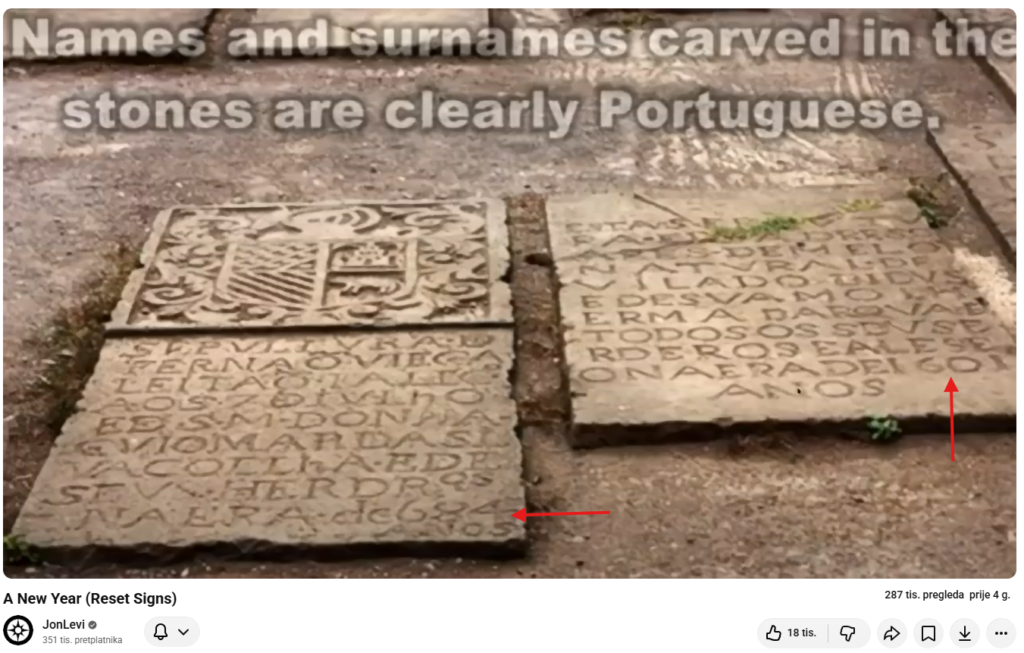
If official records say that “Portuguese Armadas first reached the west coast of India after Vasco da Gama discovered the Cape Route; he landed at Culicuta in 1498″, that the Vasai Fort was “built by the Yadava dynasty of Devagiri in 1184” and that “the Portuguese built a new fort in 1554”, why do the tombstones have the years 601 and 684?
At 12:50 minutes into the same video, a film was shown, shot a few days before the earthquake, in which it is visible that the entrance to the terminal in San Francisco read “Erected AD [anno domini] 896″ (13:17′).
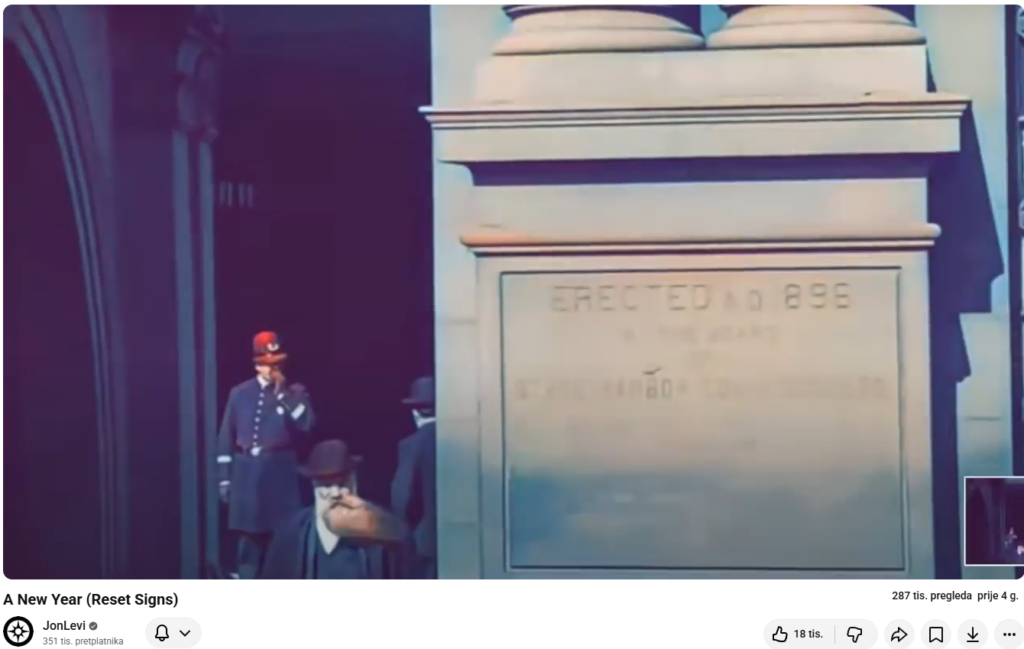
Today it is the San Francisco Ferry Building, a ferry terminal, which Wikipedia says was “completed in 1898”.
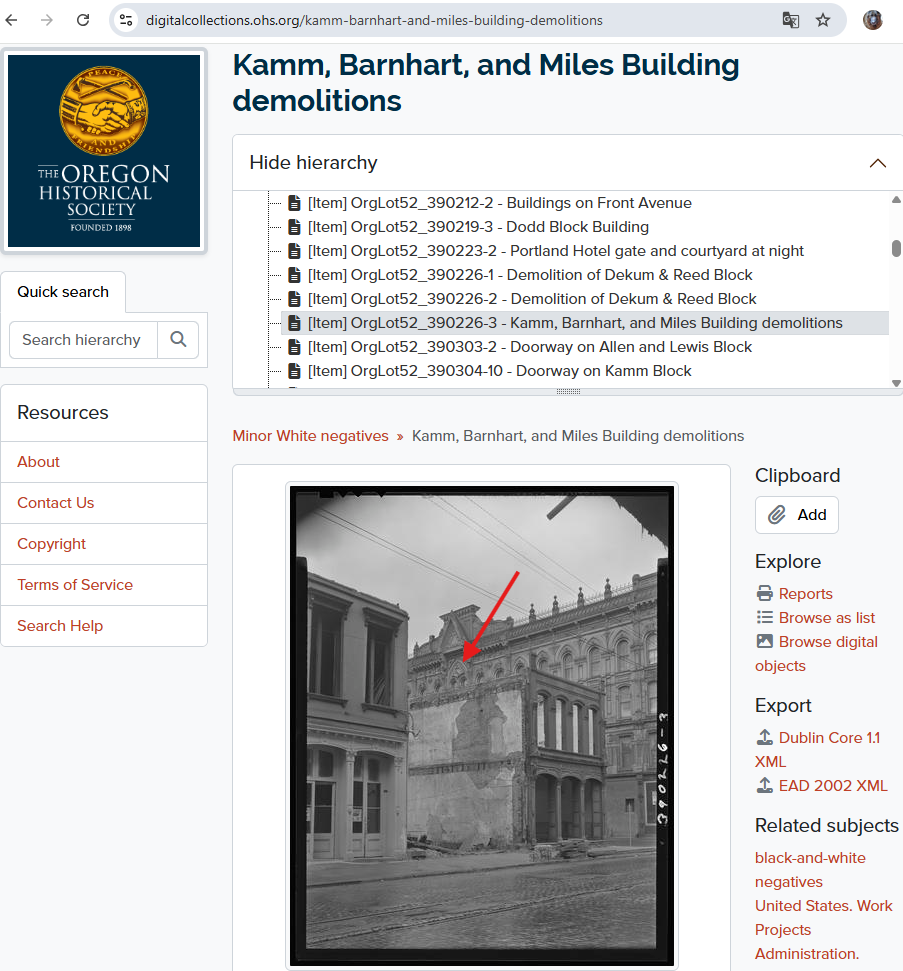
The next case is the Kamm Block in Portland, Oregon, USA. If you go to the Oregon Historical Society site item number 390226-3 is a photograph of the Kamm Block taken in 1939 by American photographer Minor White (1908-1976)
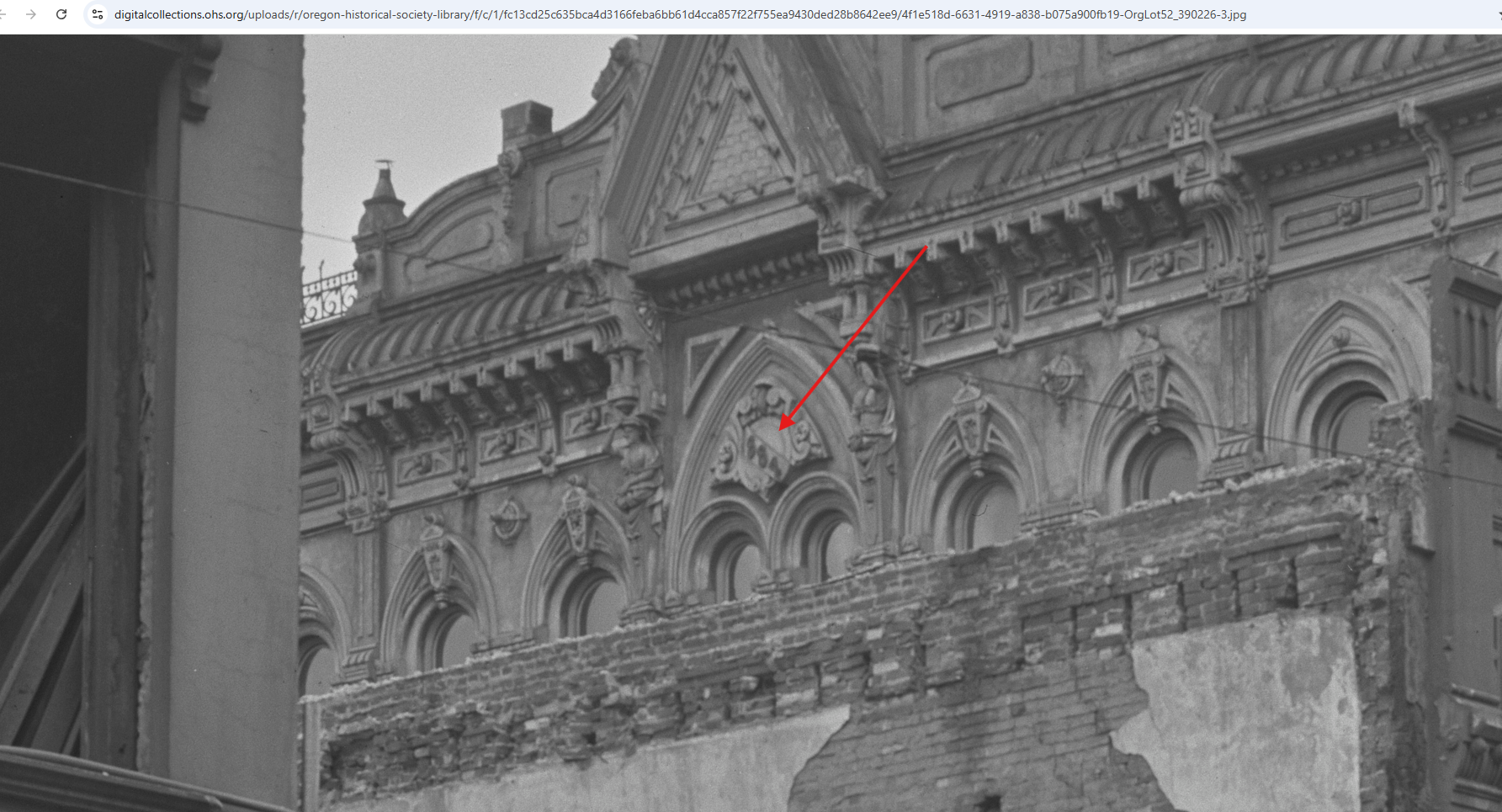
The enlarged photo from the cited source shows the year 884.
If you then go to the Princeton University Art Museum website, item number 67372 is a photograph by the same photographer from the same year showing the facade of the Kamm Block with the year 1884 written on it.
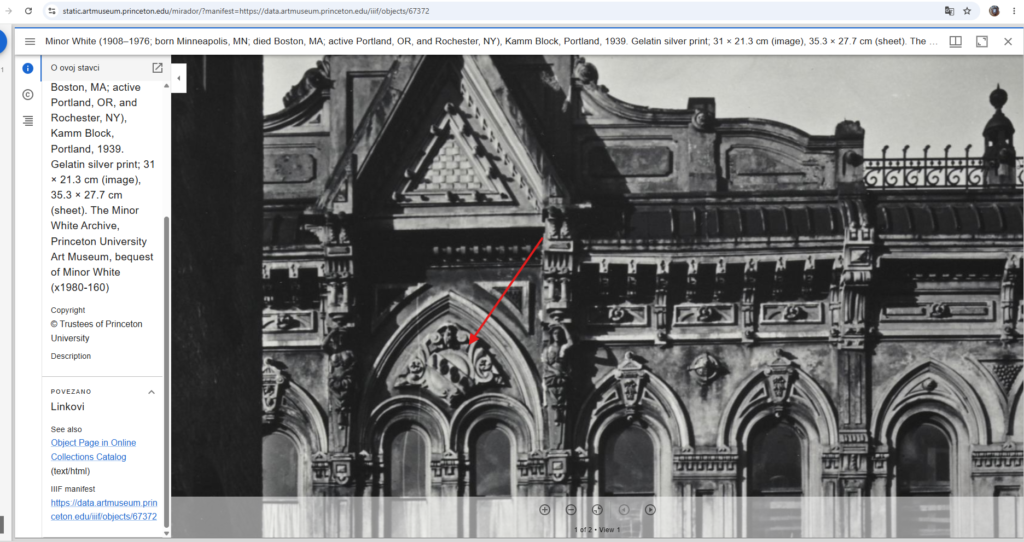
If the same photographer took two photographs of the same building in the same year with two different construction years, can we conclude that in 1939 a thousand was added to the year of construction, 884? It is also interesting that the year 1884 is given as both the year the building was designed (by the German-born architect Justus F. Krumbein) and the year it was built (by the Swedish-born employer Jacob Kamm).
The French website stereotheque.fr claims to contain more than 15,000 photographs from public and private collections illustrating a century of history from the 1850s to the mid-20th century. “Naples, vue sur l’entrée de la Galerie Umberto I” (Naples, vue sur l’entrée de la Galerie Umberto I), as the French website “La Stéréothéque“ calls it, shows a photograph of the Galleria Umberto I in Naples, Italy, by an unknown photographer, dating from 1900-1915, and bearing the inscription “ANNO DCCCXC” or “year 890“.
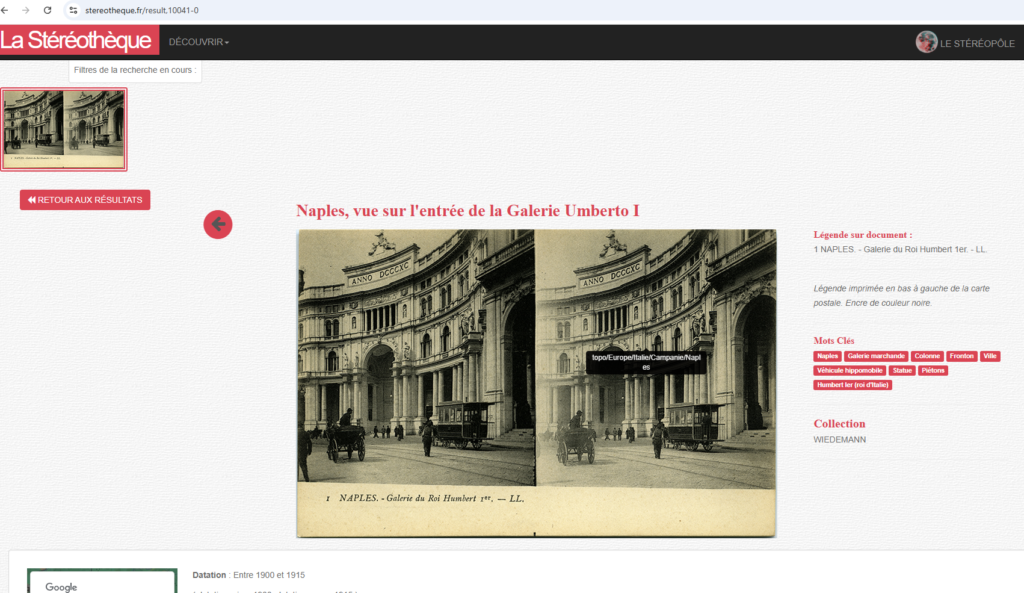
The enlarged photo looks like this:
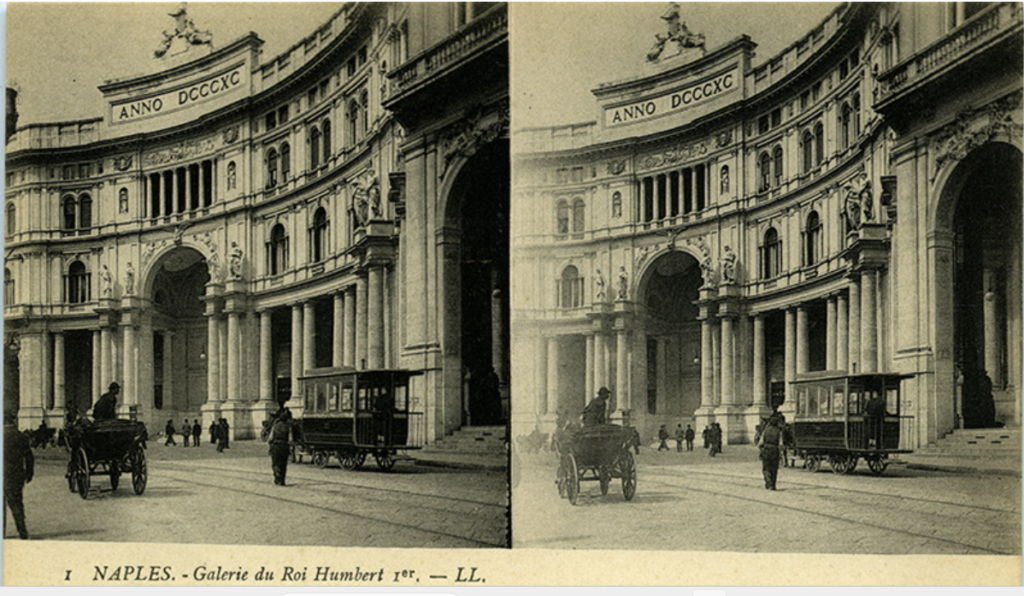
The official source states that the building was designed by Emanuele Rocco, about whom there is no information on the internet, and that it was built between 1887 and 1890.
However, an old photo, as we had the opportunity to see in the screenshot of the French site, shows “ANNO DCCCXC”, or “year 890”. Later, at an unknown time, the designation M=1000 was added to this Roman numeral, changing it to “ANNO MDCCCXC” or “year 1890”.
Today, Galleria Umberto looks like this:

Were these changes in construction years in San Francisco, Portland, and Naples common to the first half of the 20th century, or did “someone” belatedly discover that the year of construction of a particular building did not conform to the traditional historical chronology constructed by Joseph Justus Scaliger and Dionysius Petavius in the second half of the 16th and first half of the 17th centuries?